
How Custom Packaging Solutions Affect Warehouse Slotting and Storage Density?
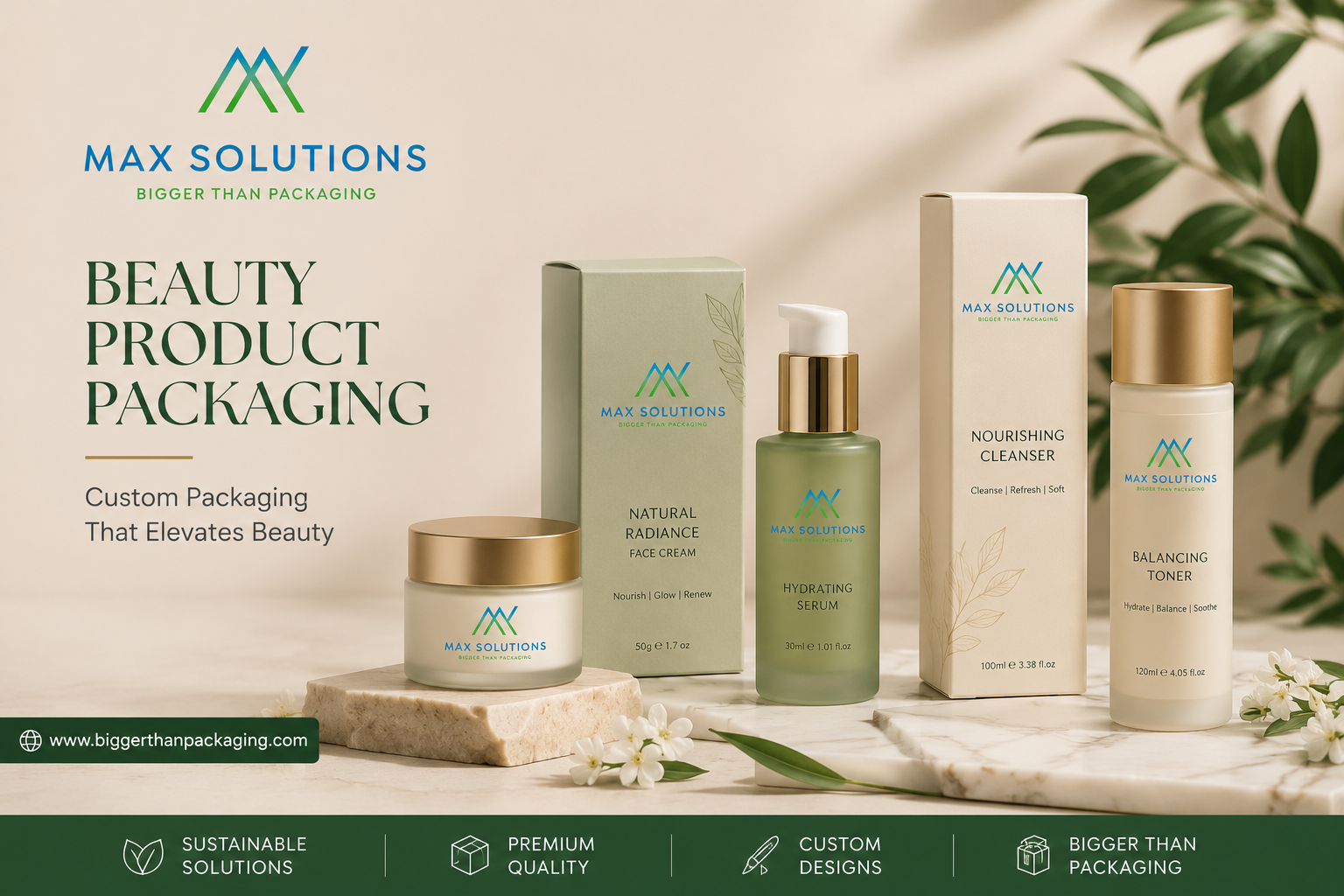
Summary: Custom Packaging has a direct impact on various parameters of the warehouse, such as slotting, storage density, stackability, picking efficiency, etc. The column helps businesses save on cubic space by eliminating wasted space and standardizing package shapes. Custom packaging solutions can play a part in maintaining an inventory management strategy that's scalable, and can strike the perfect balance between protecting the product, transportation needs, and presentation, especially when it comes to beauty product packaging.
A warehouse can lose valuable capacity without adding a single new product. The culprit is often hiding in plain sight: packaging. When cartons are oversized, irregularly shaped, or poorly matched to products, shelves fill faster, picking routes become less efficient, and storage capacity starts disappearing.
This is where custom packaging solutions become more than a branding or presentation decision. Packaging dimensions directly influence how products are slotted, stacked, stored, picked, and transported within a warehouse. By aligning packaging with product dimensions and warehouse requirements, businesses can make better use of available cubic space while improving operational efficiency.
Packaging Dimensions Influence Warehouse Slotting
Standardized cartons may be easy to come by but not always well suited to the product, making them unsuitable for efficient product handling. It can result in more carton size than is necessary, which means that you will need to use more shelves or pallets than the item actually needs.
A custom packaging solution not only allows dimensions to be created around the item but also provides the flexibility to place the item wherever required. This can help warehouse staff select suitable warehouse locations and establish a more uniform slotting pattern.
For instance, beauty product packaging might contain an extremely varied variety of sizes: small skin care containers contrasted with less bulky item packages. Packaging can be designed with each product category in mind, which would help warehouses organize stock according to the products' actual space requirements.
Better Cube Utilization Means Higher Storage Density
If there is too much empty space in the packages, a warehouse can be faced with:
Storing the lower units on one or two shelves or pallets.
Limiting the number of units on a lower shelf or pallet.
More frequent replenishment.
Increased aisle congestion.
Higher storage costs.
Increased need for further warehouse space.
Packaging that is properly designed will not only protect the product but will also save unnecessary space. This can boost the number of units that can be kept in a container with a specific size.
This translates to better cube utilization without having to increase a warehouse's footprint.
Custom Packaging Can Improve Stackability
Custom packaging designs can include size, materials, and physical characteristics that facilitate stackability. Uniform cartons are typically easier to stack on pallets and in the shop because their sizes are known and predictable.
This uniformity helps warehouse operators maintain an efficient storage setup. It can also help limit space, especially if packaging size is determined by considering height and distance from shelves.
But don't sacrifice product protection to maximize stackability! The goal is to maintain a reasonable density with structural strength.
Packaging Design Can Reduce Picking Inefficiencies
Custom-size packages can help predict storage footprints. If products always fit into identical-size bins, warehouse management systems can easily track the capacity of a holding area and determine where the packages will be stored.
Packaging can also help users identify the product more quickly because of standardization in dimensions, labeling areas, and product configurations. This can be very helpful for companies with large catalogs and many similar products.
If a process is picking and storing large numbers of items, then picking and storage efficiency gains add up.
The Role of Packaging in Inventory Growth
The impact of warehouse packaging choices made during product development can be felt for the long term. A packaging format that might be efficient with 500 units could be less efficient with 50,000 units.
As businesses grow, inefficient packaging uses a growing share of valuable warehouse space and becomes increasingly costly. A custom packaging solution offers a chance to not just assess the look and feel of the product but also where it will fit in a storage space.
Prior to making packaging decisions, companies can determine carton sizes, pallet shapes, stacking practices, handling needs, and warehouse size. This includes strategies that integrate packaging development into the supply chain plan and see it as a single process.
Designing Packaging Around the Entire Supply Chain
The concept of a good package is to be functional throughout the entire process from warehouse to customer. But being economical on shelf space, it doesn't matter if it isn't efficient if it doesn't resist transport.
The best packaging solution must always reflect the product, the space requirements for storage, the requirements for efficient handling, palletization, transportation, fulfillment, and how the product will be presented to the customer.
This is especially true for product packages in the beauty industry, where product fragility, product size diversity, presentation needs, and SKU proliferation can present challenging storage situations.
Conclusion
Packaging has a physical presence, and each square inch is part of the workflow in the Warehouse environment. Taking those factors into account, businesses can enhance warehouse space usage, design a more regulated supply chain, and optimize their packaging for dimensions, storage, stacking, and fulfillment processes.
If you are seeking a used packaging machine that aligns with your packaging objectives, then call us now. At Bigger Than Packaging, we can help you with custom packaging systems.
FAQs
1. What is the role of packaging in warehouses?
Packaging dimensions determine the shelf, bin, and storage location the product can occupy within a pallet or shelf, and the number of products it can hold in a unit. Suitable-sized packaging that is uniform can make slotting more reliable and faster.
2. Can custom packaging increase warehouse storage density?
Yes. Materials designed more efficiently to fit the product's actual size can minimize wasted space and maximize the number of units accommodated in the available loading volume.
3. Why is stackability important for warehouse storage?
In the warehouse, stacking packaging is more effective at maximizing vertical space and helps provide organized, stable product storage.
4. How does custom packaging help with picking?
When packages all have the same size, they can fill more uniform space in storage and also help to organize, identify, and retrieve products while fulfilling an order.
5. Does packaging design play a part in supply chain efficiency?
Yes. Packaging has an impact on storage, handling, palletization, transportation, fulfillment, and product protection. Taking these into consideration during package development can help enhance overall supply chain performance.